Artistic Purpose & Long-Term Goals
My goal is to paint realistic and stylized fantasy art that is comparable to the professional standard featured on book covers, card games, and role-playing games. I want to learn how to paint so I can create beautiful covers and artwork for my books.
Over the last few years, the publishing industry has moved away from using paintings on their covers. Instead, covers are made from photobashed images, symbols and icons, or overly text-based covers. While I think many of these non-painted covers are beautiful and interesting, they don’t speak to me as much as the older painted style from a few decades ago. Because I already have interest and artistic ability, I feel like I have a unique opportunity to use my talents to paint beautiful covers that perfectly capture what is in my head.
My Creative Journey Thus Far
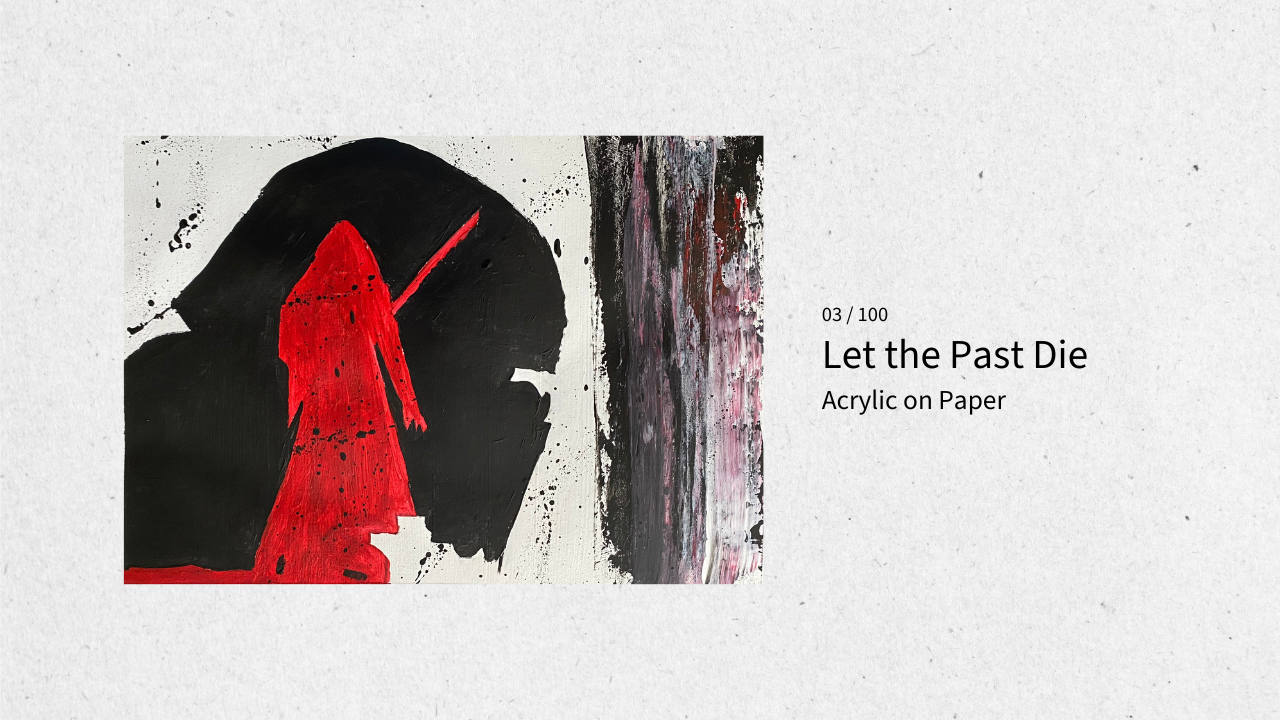
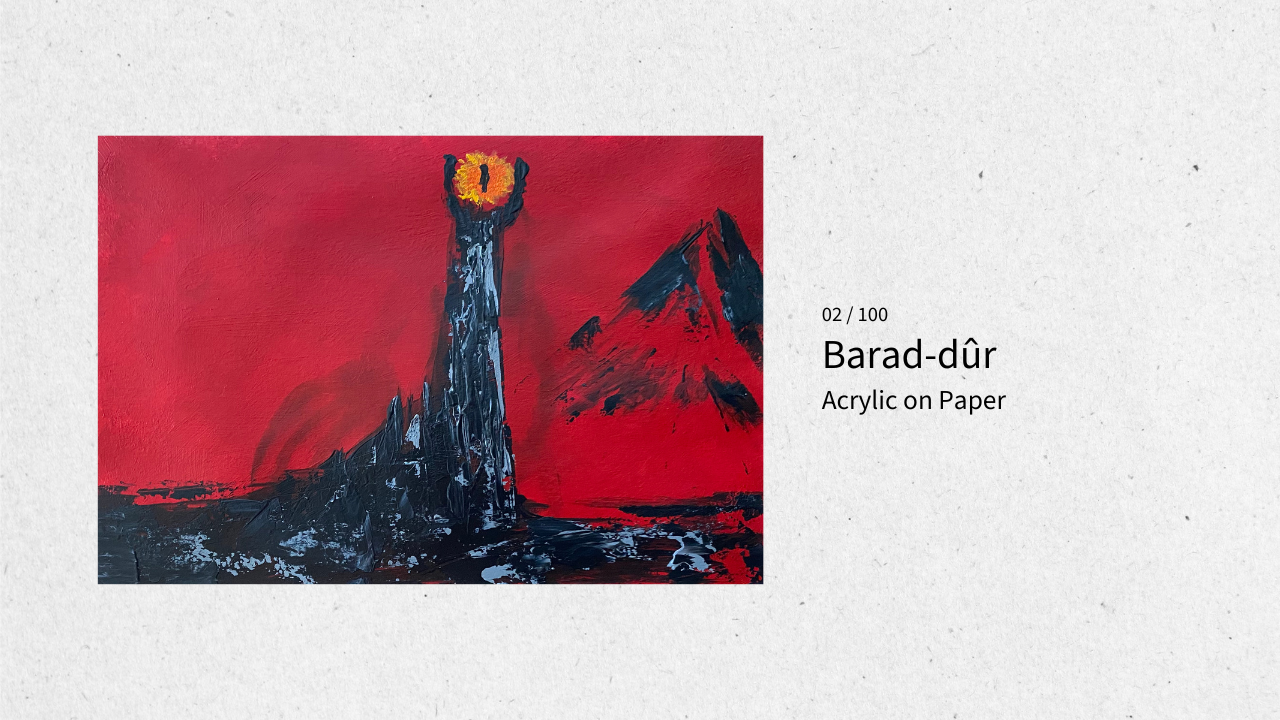
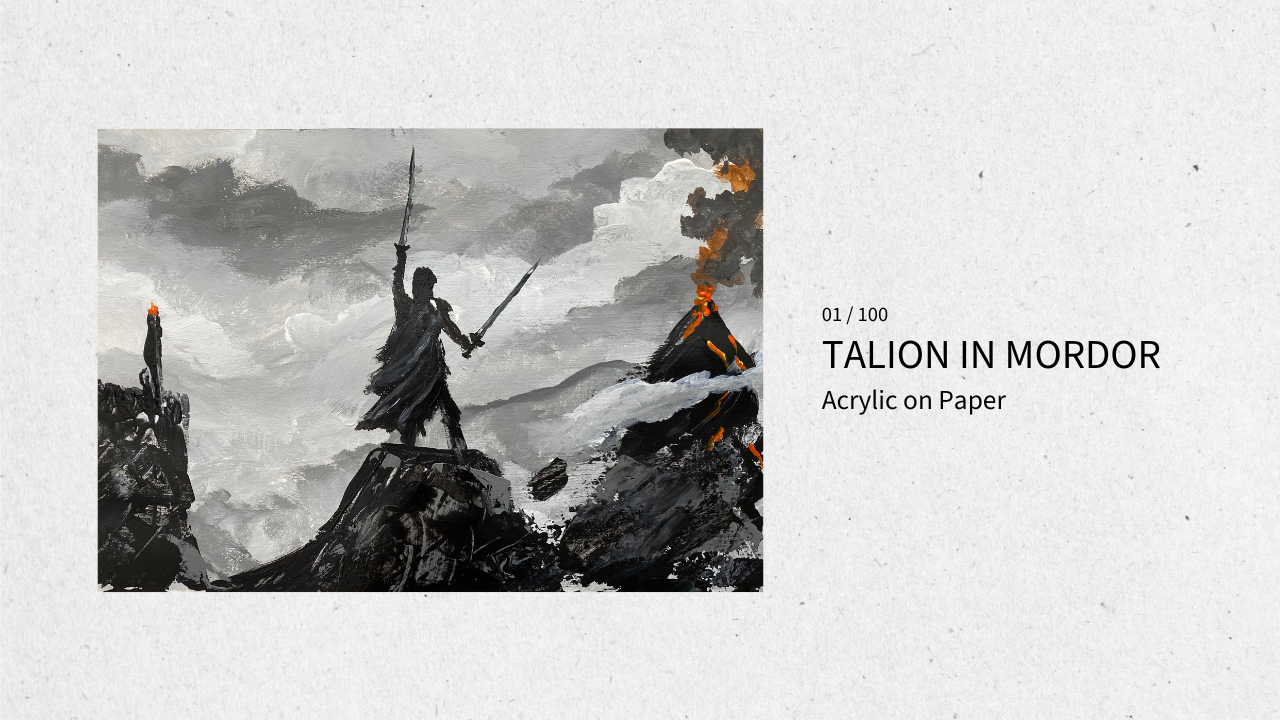
I love the classic look of oil-painted fantasy art. Ever since I was a kid, I have been drawn to book covers and magazines that feature amazing paintings of dragons, knights, wizards, and magic. Growing up, learning how to paint seemed impossible. During the Covid-19 pandemic, I learned just how possible it actually was. Over the last few years, I have done around a hundred paintings using acrylic, oil, and watercolor. I have made very few attempts to paint anything other than nature and landscapes.
The fear of failure has held me back for years. I have done a number of paintings that didn’t turn out great. Other artists whose work I admire have told me they spent more than a hundred hours on a single painting. The most I have ever spent was four. The combination of my fear of failure and the worry that I will spend a hundred hours for nothing has kept me from dedicating myself to learning how to paint. I just kept telling myself that I would start once I had more free time. Free time that never seemed to manifest. All the while, I watched video after video, hunting for shortcuts that would help me create with less effort than I knew it would take. Then, AI came out, and people started generating images as the ultimate shortcut. That’s what made me realize I would rather take the long road and make something real than keep looking for ways to make things “easy.”
As I mentioned above, I am interested in learning how to paint so I can create beautiful covers for my books. But painting a book cover at a professional level is daunting. For the last six months, I have been trying to figure out where to start. I bought several books about painting fantasy art, and from them I learned the process these artists go through to create the paintings I admire. One of these artists was Boris Vallejo. I have always loved Boris’s work, and I aspire to paint at that level. In the book Fantasy Art Techniques, Boris details the steps he took to create a painting for Heavy Metal Magazine. Another artist, Jeff Miracola, who publishes painting videos on YouTube, mentioned he based his own process on Boris’s techniques as well.
How many paintings does it take to go from beginner to professional? Most likely far more than a hundred. But we all have to start somewhere, and I have reached a point where I can not learn any more unless I start putting my knowledge into practice. No amount of reading books and watching videos will make me a professional painter. I need to practice and learn hands-on. Since most of the resources I have learned from have come from professionals who have already been through the learning process, I thought it would be interesting to document my own painting journey in detail.
So, I had an idea. For my next 100 paintings, I would do my very best to put into practice what I have learned about painting fantasy art and document it. So, for each of these paintings, I thought it would be interesting to document the process so others can see how I learned and made progress, painting by painting. Since I have to go through the learning process anyway, I want to make the most of it.
My Art Supplies
Like most aspiring artists, I have fallen into the trap of overbuying art supplies. For me, there are several reasons for this. First, part of me thinks that with the right supplies, making art will be easier. Second, I like to test out a bunch of things, so I have a lot of different types of supplies. Third, buying things is fun. Knowing that I already have a bunch of supplies, I thought it would be worth using up everything I have before getting more. That way, I only buy what I need and what I like to use.
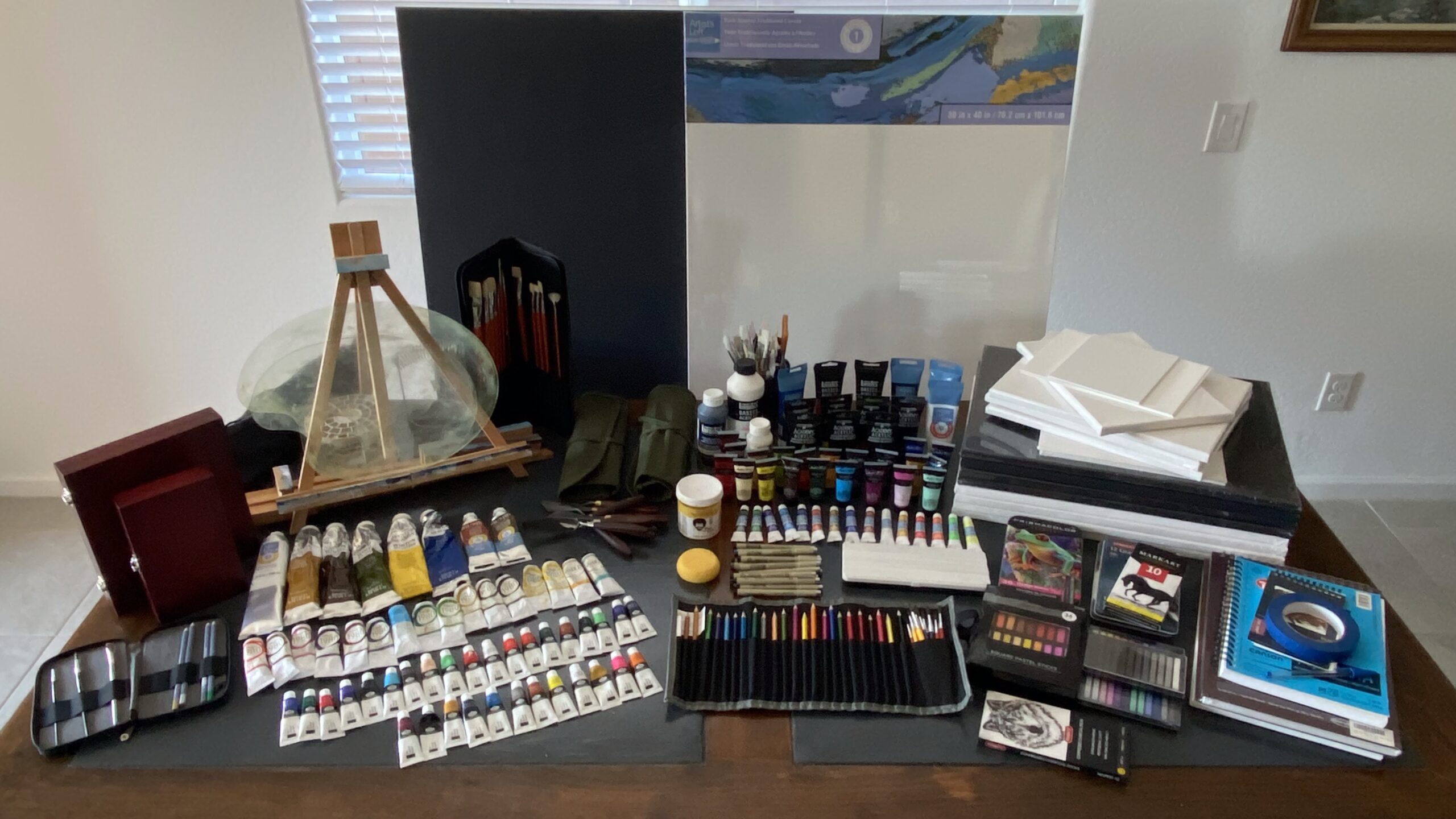
Here is a comprehensive list of all of the art supplies I currently have as I start this project:
Acrylic Painting
- 7 large bottles of acrylic paint (hard body)
- 6 medium bottles of acrylic paint (hard body)
- 20 small bottles of acrylic paint (hard body)
- 15 tiny bottles of acrylic paint (hard body)
- 1 small bottle of slow-dry medium
- 3 plastic palette knives
- 1 set of 20 acrylic paint brushes
- A 2 in acrylic paint brush
- 9 sponge brushes
Oil Painting
- 10 metal palette knives
- 9 large tubes of oil paint
- 16 small tubes of oil paint
- 31 tiny tubes of oil paint
- 30 oil paint brushes
- 2 oil paint brush canvas cases
- 1 oil paint brush case
- 2 oil paint brush holders
Watercolor Painting
- A large watercolor box set with 4 brushes, 2 pencils, a palette, and 26 small watercolor tubes
- A small watercolor box set with 3 brushes, 1 pencil, a palette, and 12 small watercolor tubes
- A set of 12 watercolor pucks with a paint brush and a tube of white watercolor paint
- 12 watercolor brushes
- 28 watercolor pencils
Drawing
- A set of 12 hard graphite pencils (Derwent brand)
- A set of 12 soft graphite pencils (Derwent brand)
- A set of 36 colored pencils (Prismacolor brand)
- A set of 10 sketch charcoal pencils (Markart brand)
- A set of 12 compressed charcoal sticks (Pandafly brand)
- 16 Micron drawing pens
- 3 small sets of small-size pastel sticks (12 count)
- 1 set of medium-size square pastel sticks (36 count)
Canvas, Paper, & Illustration Boards
- 2 canvases, 30×40 in
- 8 canvases, 16×20 in
- 3 canvases, 11×14 in
- 1 canvas, 9×12 in
- 3 canvas boards, 11×14 in
- 1 canvas board, 6×8 in
- 3 cold-press illustration boards, 8×10 in
- 1 mixed media paper book, 98 lb, 9×12 in
- 1 mixed media paper book, 98 lb, 7×10 in
- 1 mixed media paper book, 110 lb, 4×6 in
- 1 sketchbook, 68 lb, 9×12 in
Other Supplies & Materials
- 1 large bottle of white gesso
- 1 medium bottle of black gesso
- 1 small round sponge
- 1 medium natural sponge
- 2 small wooden easels
- 1 aluminum travel easel with level
- 1 container of liquid clear (Bob Ross brand)
- 1 roll of ½ in blue painter’s tape
- A large acrylic paint palette (for oil paint)
- A small acrylic paint palette (for oil paint)
It is astonishing just how many things I have accumulated over the years. Growing up, most of the art I did was with pencil and charcoal, and some of the pencils and pens have been part of my art supply collection since I was a teenager. In 2020 and 2021, I got into painting, and that is when I bought most of these supplies. At the time, I was playing around with all different types of painting, and I impulse-purchased a great variety of supplies.
Since then, I have learned a great deal about art and painting, and now that I am getting back into painting, I feel the desire to get new supplies. It’s sort of a habit of mine. When I get into a hobby, I overinvest in equipment or materials. This time, I am determined to use up the supplies I already have and use them as a way to learn. I will be using these older paints until they run out. I may find that the experience is less than ideal, since the paints are starting to get a little thicker as they’ve dried out a touch. Besides, this is just practice, and the important thing is that I am getting started with what I have!
The Next 100 Paintings
For the next 100 paintings, I will be creating simple blog posts to keep track of the following:
- Painting Materials: A comprehensive list of the paints and supplies used to create the painting.
- Composition Details: An overview of how long the painting took to complete, when it was finished, and the step-by-step process of how it was painted.
- Reflection: A journal-like entry reviewing what I learned, what I felt, and what thoughts I had while creating the painting.
As I mentioned above, I have already completed about a hundred paintings. If you are reading this as a true beginner, I wanted to make sure I set the right expectations. I have enough painting experience that I know a lot of the basics. Since I am familiar with painting, I feel confident I can start to really challenge myself and jump into projects I wouldn’t have dared attempt when I first got started.
I hope that the information I document over the next 100 paintings will be as useful for a true beginner as it will be for an intermediate beginner like me. I might not be starting from the bottom, but I still have a long climb ahead of me to reach the professional level I dream of achieving.
Thanks for Reading
Thank you for reading. If you want to see how this wild creative journey goes, join my newsletter, which will help you stay up to date on all my new projects. Sign up by filling out the form below.